
Spectrum Heating Technology:
Rethinking How We Heat Churches & Heritage Buildings
Save 65% plus on energy usage
High-Level Heating Without High Energy Demand
Heating a church, heritage building or large open space has traditionally meant accepting a compromise: use significant amounts of energy heating a huge volume of air, or install increasingly high-powered radiant heaters to project sufficient warmth down to the people below.
We knew there had to be a better way.
Connect recognised that existing infrared technologies each offered benefits, but also came with compromises. Long-wave provided gentle, zero-light comfort but was better suited to lower mounting heights, while short-wave could project from greater heights but often relied on considerably higher power and visible light.
We researched and developed Spectrum to bring together the key benefits required for large and heritage spaces: zero visible light, high-level mounting, fast radiant response, broad heat distribution and lower electrical demand. The result is our Spectrum medium-wave heating technology — developed specifically to deliver high performance from high level without automatically requiring high wattage.
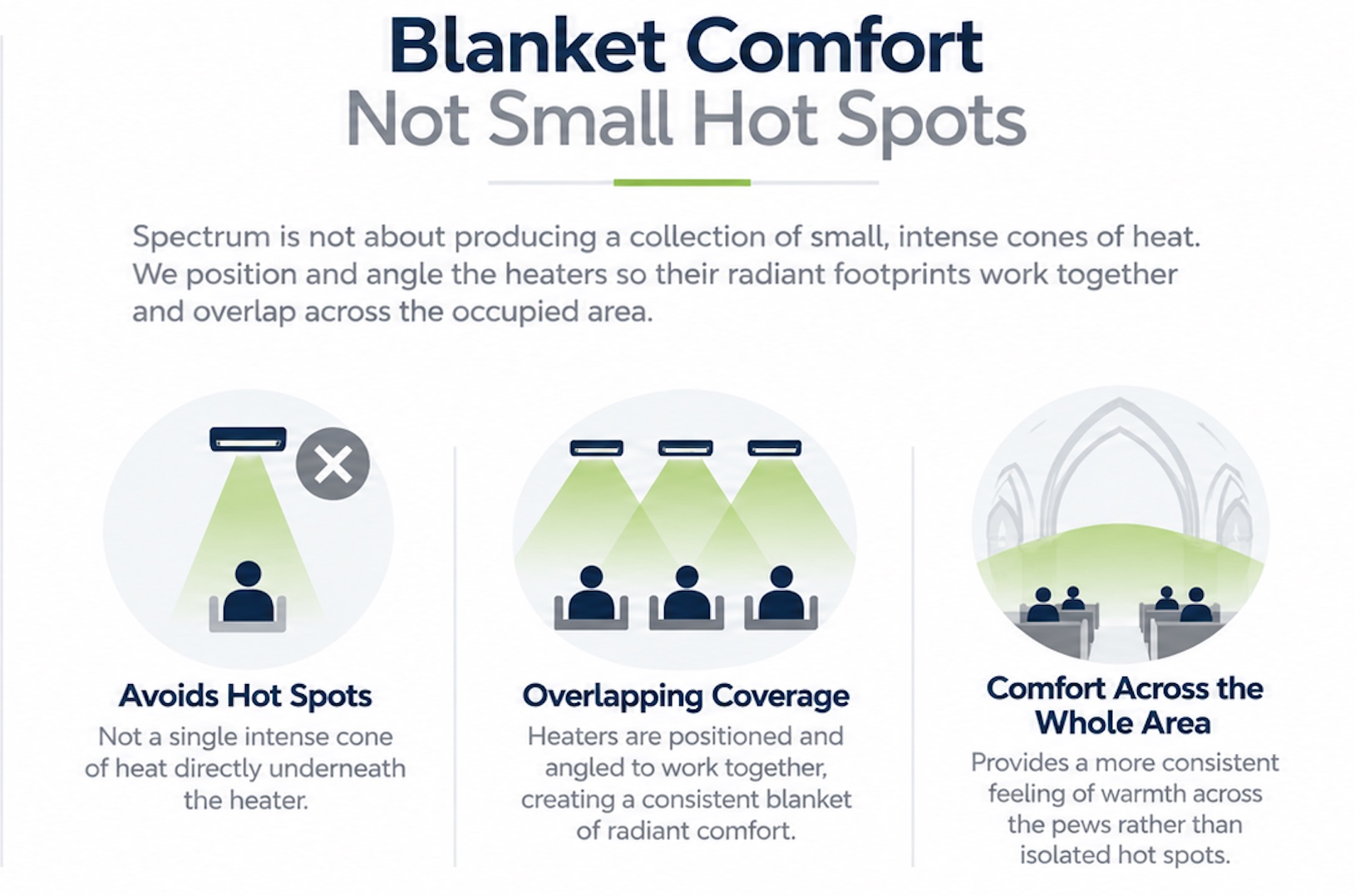
Spectrum changes the way we approach large-space heating. Rather than attempting to heat the entire volume of a church, the system directs radiant energy towards the occupied areas, creating a broad blanket of comfort at congregation level.

The Proof Is In The Technology!
The testing was crucial
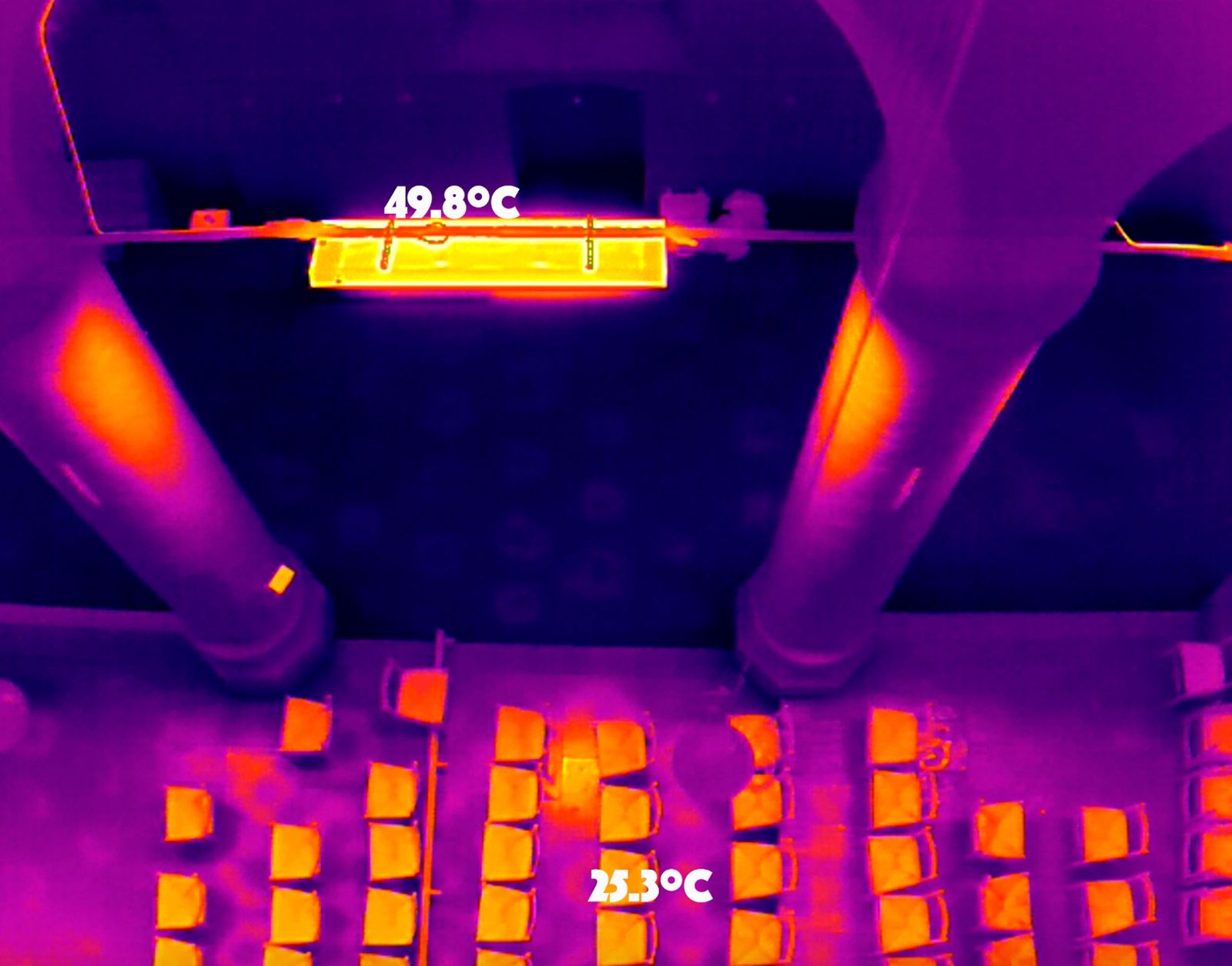
Diagram 1.
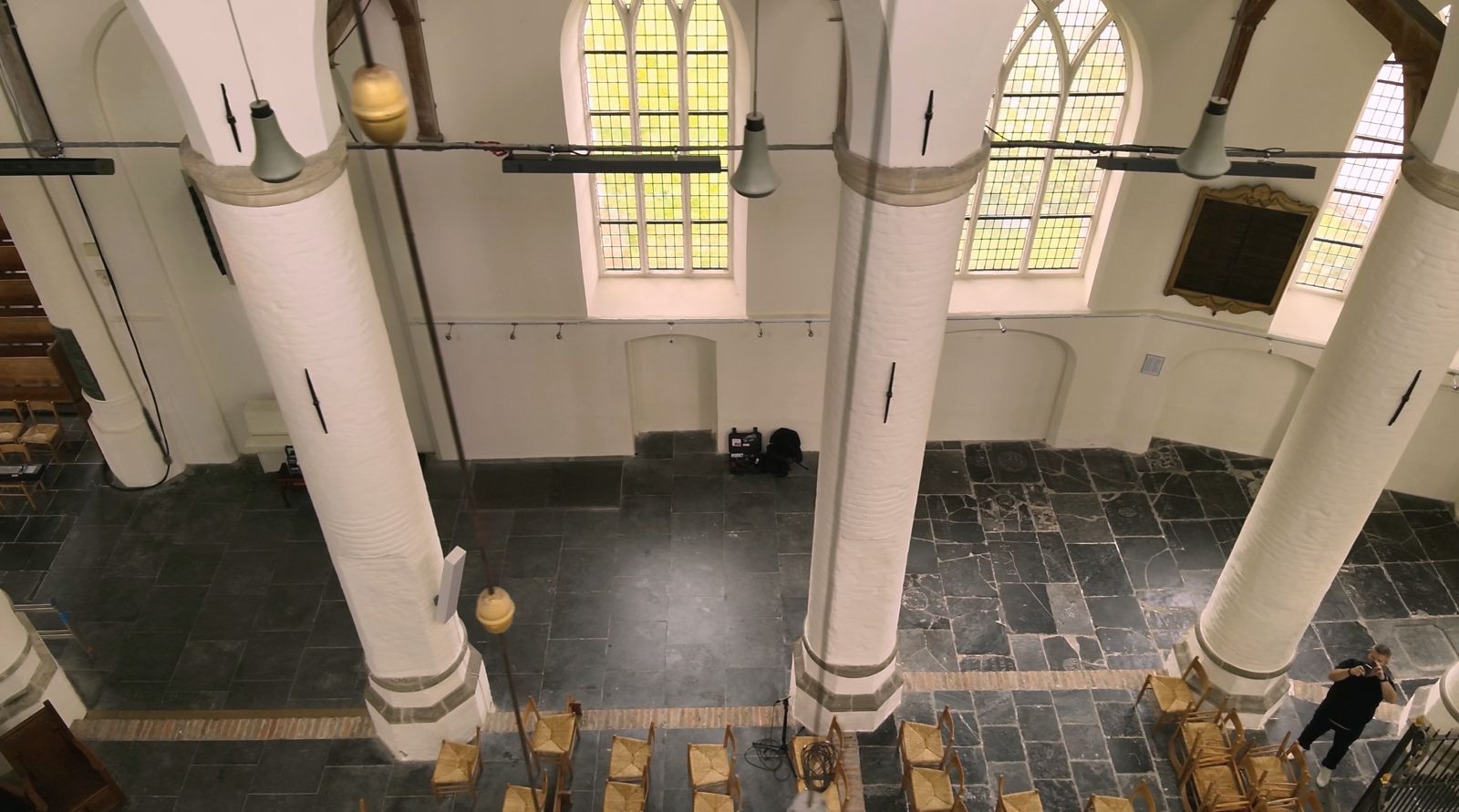
Diagram 2.
The Performance Test
High-Mount Spectrum Heater Installation
A test rig was successfully installed at the church, featuring Connect Spectrum infrared heaters mounted at a height of over 8 metres above ground level. Despite the challenging elevation, the system delivered exceptional performance. (See Diagram 1: Test rig with heaters mounted at 8m height.)
Remarkably, the setup utilised Spectrum 3.0kW heaters a notably low wattage for applications aiming to achieve ambient temperatures exceeding 20°C. This level of thermal performance at such low power and mounting height was a test.
This test project clearly demonstrates that Connect Spectrum heating technology delivers rapid, effective warmth even in large, high-ceilinged spaces achieving significant temperature gains within minutes from heights of up to 8 meters.
The results prove that Spectrum Technology is not only a reliable and efficient heating solution, but also a strategic investment for reducing energy consumption and, more importantly, operational costs.
Its discreet, zero-glare operation and single-phase compatibility make it especially suited to large, hard-to-heat buildings such as places of worship, community halls, and heritage properties. Connect Spectrum redefines sustainable comfort where performance meets practicality.
In comparison, other systems often require 6kW to 12kW units to achieve similar results, driving up energy consumption and frequently necessitating costly 3-phase electrical upgrades. With Spectrum, you get industrial grade performance from single phase units, keeping installation simple and operating costs low.
FULL TEST INFORMATION AVAILABLE UPON REQUEST
Why Connect Spectrum Solutions?
Spectrum Heating Technology
Lower Wattage Only Matters If It Performs
Simply specifying a smaller heater doesn’t make a heating system efficient. It still needs to provide the required comfort. That is why Connect assesses mounting height, radiant projection, coverage at congregation level, building construction, electrical capacity, occupancy patterns and zoning before recommending the technology.
We don’t make the building fit the heater. We select the heating technology to fit the building.
A Different Question for Church Heating. For churches considering electrification or moving away from fossil fuels,
the question shouldn’t simply be:
“How many kilowatts of heating can we install?”
It should be:
“How little energy can we use while still delivering the comfort the congregation needs?”
That is the thinking behind Spectrum.
The Spectrum Range
Three Models, One Solution:
Why High Mounting Normally Means High Power
One of the biggest challenges with conventional infrared heating is mounting height.
Traditional high-intensity short-wave heaters can project radiant energy over significant distances, but achieving useful radiant intensity from 6, 8 or 10 metres can require high-powered units. Depending on the system and application, this can mean heaters rated at 6kW, 9kW, 12kW or more.
⚡ High wattage × multiple heaters = significant electrical demand
For many churches, this becomes a major obstacle. Existing electrical supplies can be limited, and some buildings do not have three-phase power available. A proposed heating system may therefore appear suitable until the total connected load and available incoming supply are considered.
Spectrum approaches this challenge differently.
Key Features
“Invisible Heat, Maximum Coverage.”